 Villages Divided — Life Along the Line of Demarcation in WWII, Vichy France
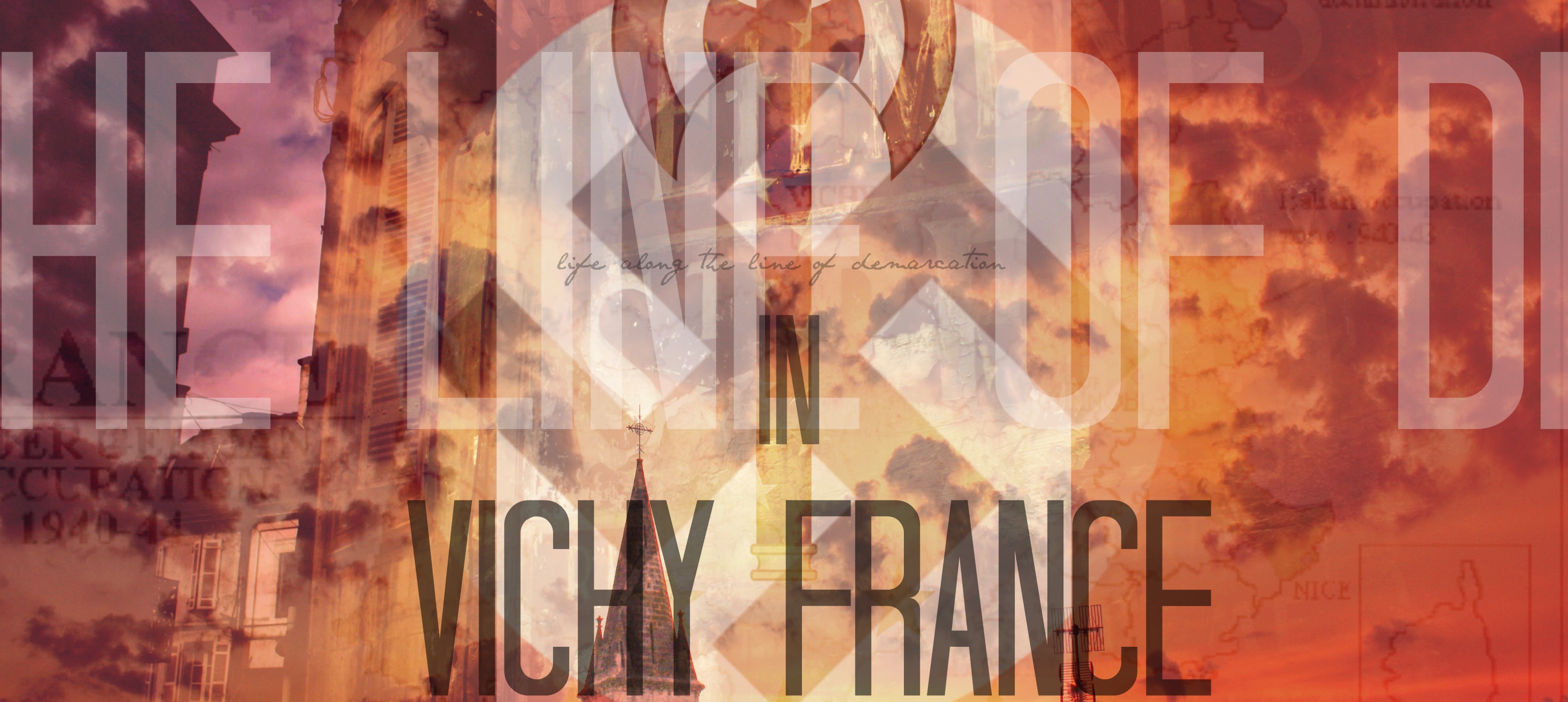

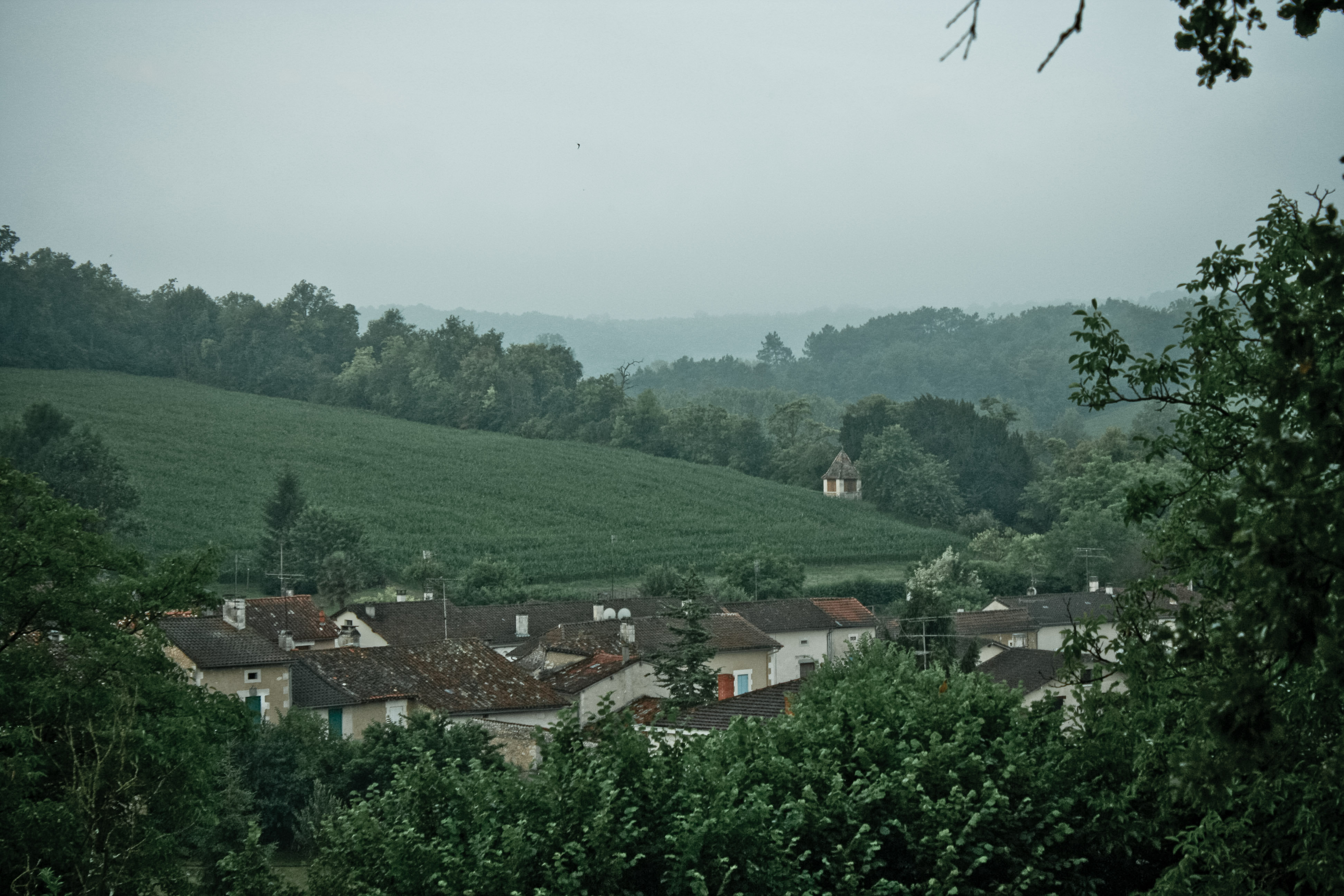
In 1940 German troops erected a line of demarcation through the already divided country of France. The line was set up to the west side of villages in occupied territory, such as Montapon, Echourgnac, and La Jemaye. To cross the line at any given time, a person had to have what was called a pasisser-passer. It was very difficult to obtain. Those caught trying to cross the line who did not possess the correct documentation were arrested and imprisoned. The sentence for such an offense was fifteen days, for men. It was slightly lighter for women who were only imprisoned for ten days.

The line of demarcation represents only a fragment of what life was like for those residing in “unoccupied” Vichy France. Restrictions over travel had a crippling effect. Business could not be conducted as usual; the most innocent act could be misconstrued. This could land a person before a death squad or in prison — which usually resulted in being put on a train to any number of concentration camps, beginning with those in Paris. As the war waged on, conditions in Vichy France deteriorated.

Ironically, occupied France was in a much better shape, in spite of all the devastation, than the unoccupied territory.[1] No matter how benign it may seem, this line of division is powerful; it shaped France’s future. To present day, some villagers living along the divide acknowledge this in a variety of ways; occupants residing in villages once situated in occupied France are less willing to discuss the past than those in unoccupied territory. Or when finding someone willing to share their story, the details and sentiment contrast sharply with those one hears told about life on the Vichy side. In an occupied village a story was told about a Nazi soldier who entered a man’s home demanding a raincoat. A few days later, the soldier returned the coat clean and neatly folded. “The German’s were so efficient! They believed in order.”[2] Some of the reasons for contrasting sentiment may hinge on the way the onset of the war played out.
On the 3rd of September 1939, just five months after the end of the Spanish Civil War, together with Britain, Australia and New Zealand, France declared war on Germany. Only six weeks later that France capitulated to the German invasion. French humiliation cannot be overstated. This was a stunning defeat – particularly since before the war the French army was considered the most powerful in Europe.[3] The scale of the crisis caused by capitulation was massive. National identity proudly rested on the republics long-held motto, liberté, égalité, fraternité (liberty, equality, fraternity) was at steak. The French army was not given a chance to prove itself in victory or defeat, at the same time French citizens were cast a new role. Over night, under German rule, a new French identity was born that revered travail, famille, patrie (work, family, fatherland).
Further destruction of French identity happened just as swiftly. A Nazi invasion resulted immediately in a divided France. In a matter of days the nation was fragment in ways that left and lasting wounds. The line of demarcation still remains in people’s minds as a permanent marker that separate those who suffered more from those who suffered less. Those who complied with the enemy demands from those who resisted them. The story about the raincoat erases traces victimization. And, demonstrates each French citizen touched by the war possessed at least one freedom, one could interpret what was happening in their world. For the man with the raincoat, escape from an organized regime such as the Nazi’s must have seemed impossible. Where he lived, occupied territory was under the direct rule of German forces where most French citizens are known for having remained rather subdued, an altogether different scenario was unfolding and attitudes were anything but subdued.
It is in unoccupied France, more fractures in identity were created when those in power were replaced with the Vichy regime made up of French citizens whose allegiance was clearly aligned with German rule. The new Vichy government did not have to run for election. As a result, it was devoid of a political platform from where its ideologies were defined. Without a basic political theory, some observers have denied that the Vichy regime had any theoretical basis at all and have claimed that it was no more than a creature of accidental circumstances.[4] Some say the Vichy was in part the product of social and economic conditions that existed in France as a result of the First World War, during which France split more blood than any other nation.[5] This is the same France where one could observe, in the last years, before 1939, the growth of many youth groups, young Radicals, young Socialists, young Catholics, young rightists and so on.[6] Fueling some of these groups was a rising tide of immigration from Italy and in particular Spain, as a result of the end of the Spanish War.

In any case, the new government regime acted in accord with German desires and was not a free agent, but a sharply circumscribed instrument created by the German overlords in Paris whose desire was to push from one collaboration measure to another.[7] The German aspiration for collaboration was somewhat cultivated by and made easier by France’s recent past.
The social and economic conditions of prewar France show a demographic nightmare rife with imbalances. For instance, twenty five percent of the entire population consisted of the age group of fifty to eighty.[8] Like the politicians in Paris who did not find themselves able to fulfill the desired changes wanted within such a polarized country, French youth was searching for something meaningful to define their lost generation. If the Vichy government was not appealing, the alternative option for those living in unoccupied was to join la Resistance, or what is commonly referred to as la maquis, meaning, “wild.” The name drew its inspiration from, “La Double,” the forest that still encapsulates the department, La Dordogne, with its prefecture in nearby, Périgueux.
La Double was a largely untamed forest. It had few roads making access by vehicle was really difficult. Walking in was difficult, too, because the undergrowth was thick. Add weapons to a sojourn, ammunition, radios, what-have-you — you still do not know exactly where you are going because you do not know where la maquis are hiding. La Double provided a safe home to the Resistance. The forest, like those serving in it, was wild. [9]

By August 25, 1940, three hundred thousand displaced people in France returned to their homes. Nearly thirty thousand remained in La Dordogne, which was considered safe, although it was not without its problems.[10] October 8, 1942, the deportation of Jews to Auschwitz begins in La Dordogne from the villages nearest the line of demarcation. La maquis did not become a factor directly dealt with by the German troops until 1942. However, this is not to say there did not exist occasions when the German’s would enter villages in unoccupied France. They did. They would come there and demand to see a list of the Jews who were living in the village. They would kill the person who gave them the list then capture all the women and children and deport them. If there were no Jews found, they would terrorize the village.[11]

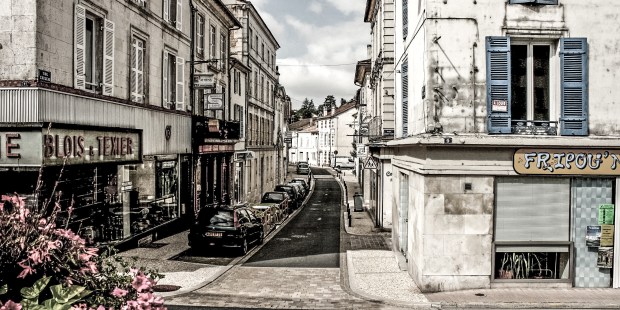
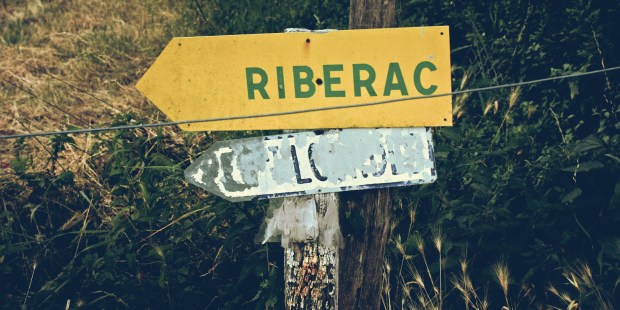

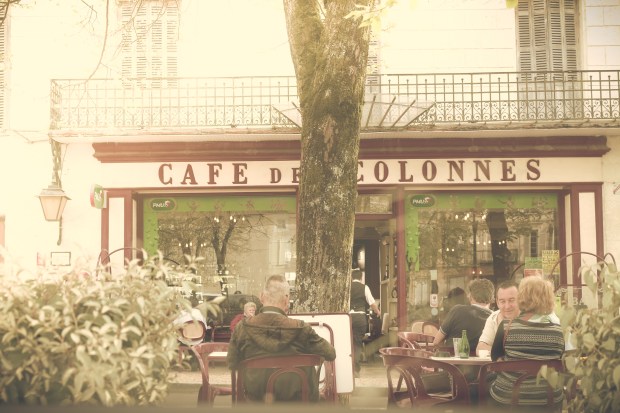

Additional Photo Galleries:
Works Cited
“Atlas Historique .” Carte de la France 1940 a 1944. http://www.atlas-historique.net/1914- 1945/cartes_popups/France1940-44GF.html (accessed 08 31, 2010).
Bessine, Madame, interview by Jeanette Lamb. Riberac, France.Translated by Ellie Hesse Mana Sacho. Riberac, La Dordogne, (09 01, 2010).
Cadroas, Peirre. Resistances Chronique de l’histoire 1939-1945. Riberac: Cadroas, Peirre, 2005. Cadrosas, Pierre, interview by Jeanette Lamb. Riberac, France. (09 07, 2010).
Davidson, James. After the Fact The Art of Historical Detection. New York, New York: The McGraw-Hill Companies, 2005. Fanlac, Pierre. What to see in Dordogne Perigord. Perigord: Pres la tour de Vesone, 1980.
“France in Defeat, 1940.” Eye Witness of History. 2006. http://www.eyewitnessofhistory.com/w2frm.htm. (accessed 08 20, 2010). “France’s Land and Topography.” Discover France.
http://www.discoverfrance.net/France/DF_topography.shtml#. (accessed 08 30, 2010). Fredrich, Carl.
“Government as a Step Toward Self-Rule.” The Public Quarterly 7 (1943): 527-541. Gaston, Jeze. “The Economic and Financial Position of France in 1920.”
The Quarterly Journal of Economics 2 (1921): 175-214. Giff, Steve. Interview by Jeanette Lamb. St. Sevrein, France. (08 16, 2010). Gottschalk, Louis. “Our Viche Fumble.”
The Journal of Modern History 20 (1948): 47-56. Gurvitch, George.
“Social Structure of Pre-War France.” The American Journal of Sociology 48 (1943): 535-554. Hammer, Ellen.
“Hindsight on Vichy.” Political Science Quarterly 61 (1946): 175-188.
Hoffman, Stanley. “Collaborationism in France During World War II.”
The Journal of Modern History 40 (1968): 375-395.
Jennings, Eric. “Last Exit from Vichy France: The Martinique Route and the Ambiguities of Emigration.” The Journal of Modern History 74. , June 2002: pp. 289-324.
Kammerer, Gladys. “The Political Theory of Vichy.” The Journal of Politics 5 (1943): 407-434.
Kelly, Donald. Faces of History. New Haven & London: Yale University Press, 1998.
Montry, Jean. “Unoccupied France and German War Economy.” Military Affairs. Summer 1942. http://www.jstore.org/stable/1982759 (accessed 09 10, 2010).
Penaud, Guy. Andre Malraux et la Resistance. Perigueux: Editions Fanlac, 1986. —. Chroniques secretes de la Resistance dans le Sud-Ouest.
Bordeaux: Editions Sud-Ouest, 1993. —. Histoire de Perigueux. Perigueux: Editions Fanlac, 1983. —.
Les Milliards du Train de Neuvic. Perigueux: Editions Fanlac, 2001.
Queya, Christoper, interview by Jeanette Lamb. Translated by Ellie Hesse Mana Sacho.
Riberac, France. (09 17, 2010). Sacho, Martine (Mana), interview by Jeanette Lamb. Riberac, France. (09 01, 2010).
Technopole, Ester. St-Martin-de-Riberac, France. (09 19, 2010).
Vignaux, Paul. “”Resistance and Humanism.”.” Journal of Educational Sociology,, (Apr., 1945): : 454-456.
Woman, Unknown, interview by Jeanette Lamb. Reasons for Not Granting an Interview St-Martin-de-Riberac, (08 27, 2010).
[1] “France in Defeat, 1940.” Eye Witness of History. 2006. http://www.eyewitnessofhistory.com/w2frm.htm. Accessed 20 Aug. 2010.
[2] Giff, Steve. Interview by Jeanette Lamb. (08 16, 2010).
[3] ibid
[4] Kammerer, Gladys. “The Political Theory of Vichy,” The Journal of Politics 5 (1943): 407
[5] (Gaston, Jeze. “The Economic and Financial Position of France in 1920.” The Quarterly Journal of Economics 2 (1921): 176
[6]Gurvitch, George. “Social Structure of Pre-War France.” The American Journal of Sociology 48 (1943): 536
[7] Ibid.
[8]Gurvitch, George. “Social Structure of Pre-War France.” The American Journal of Sociology 48 (1943):535
[9] Bessine, Madame, interview by Jeanette Lamb. (09 01, 2010).
[10] Cadroas, Pierre. Resistances Chronique de l’histoire 1939-1945. (Riberac: Cadroas, Peirre, 2005): 129
[11] Queya, Christoper, interview by Jeanette Lamb. (09 17, 2010).
[12] Bessine, Madame, interview by Jeanette Lamb. (09 01, 2010).
[13] Queya, Christoper, interview by Jeanette Lamb. (09 17, 2010).
[14] ibid
[15] ibid
[16] Queya, Christoper, interview by Jeanette Lamb. (09 17, 2010).
[17] Ibid.
[18]Technopole, Ester. St-Martin-de-Riberac, France. (09 19, 2010).
[19] (Bessine 2010)
[20] Queya, Christoper, interview by Jeanette Lamb. (09 17, 2010).
 Digital History Projects